PTFE vs. polyurethane: choosing the right seal material.
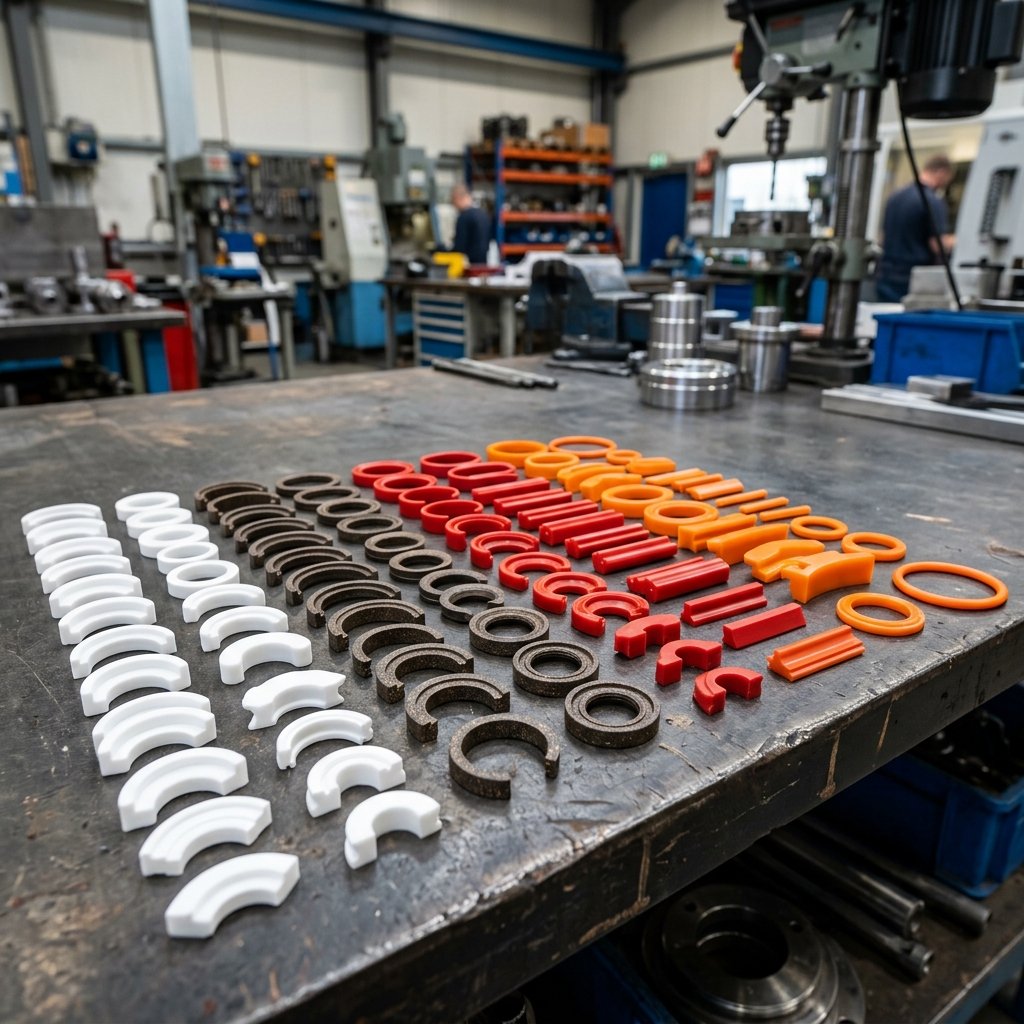
PTFE and polyurethane cover most of the sealing applications we quote, and the choice between them is rarely about cost — it's about how the application actually behaves once the cylinder is running. Here's how we walk customers through the decision.
Friction and breakaway
PTFE has a notably lower coefficient of friction than polyurethane, which matters in applications sensitive to stick-slip, such as servo cylinders or precision positioning equipment. Polyurethane's higher friction is rarely a problem in general industrial service, but it shows up as inconsistent motion in high-precision systems.
Wear resistance and pressure handling
Polyurethane generally wins on abrasion resistance and extrusion resistance at high pressure, which is why it dominates standard rod and piston seal designs. PTFE compounds, often filled with bronze, glass, or carbon to improve wear life, are typically reserved for dynamic, high-speed, or low-friction-critical applications rather than as a default choice.
Temperature range
This is where PTFE clearly separates itself. Polyurethane is usually limited to a working range up to roughly 80–90°C before mechanical properties degrade, while PTFE compounds tolerate a much wider span, both colder and significantly hotter, making it the default for ovens, dryers, and extreme-climate mobile equipment.
Chemical compatibility
PTFE is close to chemically inert and handles aggressive fluids, solvents, and cleaning agents that would swell or soften polyurethane over time. In food, pharma, and chemical processing environments, this compatibility is often the deciding factor regardless of friction or wear considerations.
Cost and lead time
Polyurethane components are typically lower cost and more readily available in standard sizes, which matters for maintenance teams stocking spares. PTFE seals, especially filled compounds in custom profiles, usually involve longer lead times and higher unit cost.
In practice, we default to polyurethane unless the application gives us a specific reason not to: extreme temperature, aggressive chemistry, or a friction-sensitive dynamic requirement. If you're unsure which category your application falls into, send us the operating temperature, fluid type, and pressure range, and we'll recommend a material rather than just a profile.