Why rod seals fail early: six root causes we see in the field.
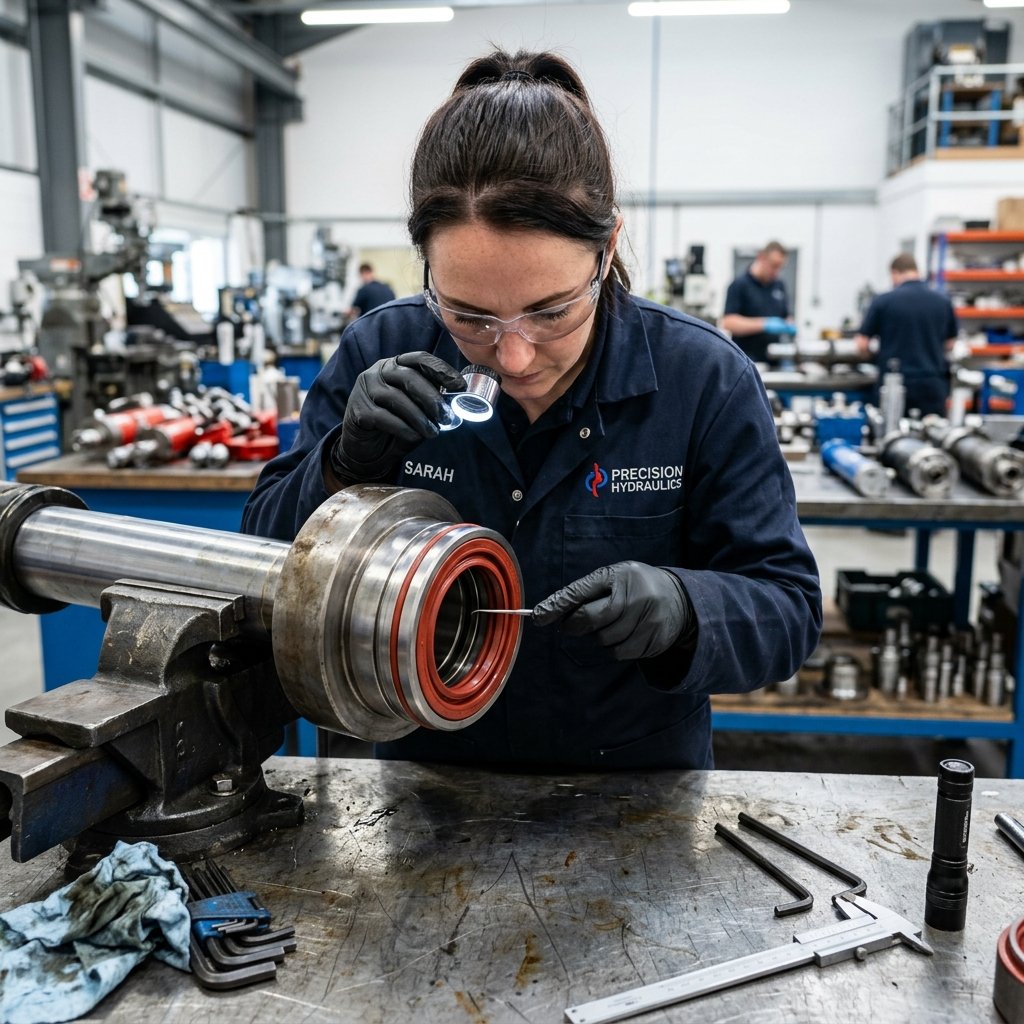
When a hydraulic cylinder starts weeping fluid months before it should, the seal usually gets blamed first and inspected last. In our experience repairing and re-specifying cylinders across packaging lines, presses, and mobile equipment, premature rod seal failure almost always traces back to one of six conditions — most of which have nothing to do with the seal itself.
1. Groove tolerance out of spec
A groove machined even a few thousandths outside tolerance changes the seal's compression and squeeze. Too loose, and the seal moves under pressure cycling; too tight, and it takes a permanent compression set within weeks. We ask for a groove drawing before quoting any custom profile precisely because this single dimension explains a large share of the early failures we see.
2. Surface finish on the rod
A rod surface that's too rough abrades the sealing lip; one that's too smooth can't retain the thin fluid film the seal needs to ride on, causing dry running and heat buildup. Both extremes shorten life dramatically, and both are invisible until the cylinder is already in service.
3. Fluid contamination
Particulate in the hydraulic fluid acts like sandpaper against the dynamic sealing edge. This is the most common failure mode in mobile and construction equipment, where breather seals and reservoir housekeeping get less attention than the cylinders themselves.
4. Misalignment and side loading
Seals are not designed to compensate for a bent rod, a worn bushing, or off-axis loading. Side load concentrates wear on one face of the lip, producing an asymmetric failure pattern that's easy to misdiagnose as a bad batch of seals.
5. Thermal cycling beyond material limits
Polyurethane and nitrile compounds have defined temperature windows. Repeated cycling near or beyond those limits accelerates hardening and cracking, particularly in applications with long dwell times under load, like presses and clamping cylinders.
6. Wrong material for the chemical environment
Standard nitrile seals degrade quickly in contact with certain synthetic fluids, cleaning agents, or process chemicals. A material swap that looks identical on a drawing can behave completely differently in service.
Most of these causes are preventable at the specification stage. When we review a failed seal, we're really reviewing the groove, the rod finish, the fluid condition, and the duty cycle around it — the seal is usually just the part that showed the symptom first. If you're seeing repeat failures on a particular cylinder, send us the groove drawing and a description of the operating conditions; it's usually enough to pinpoint which of these six is the actual cause.