When you need a backup ring — and when you don't.
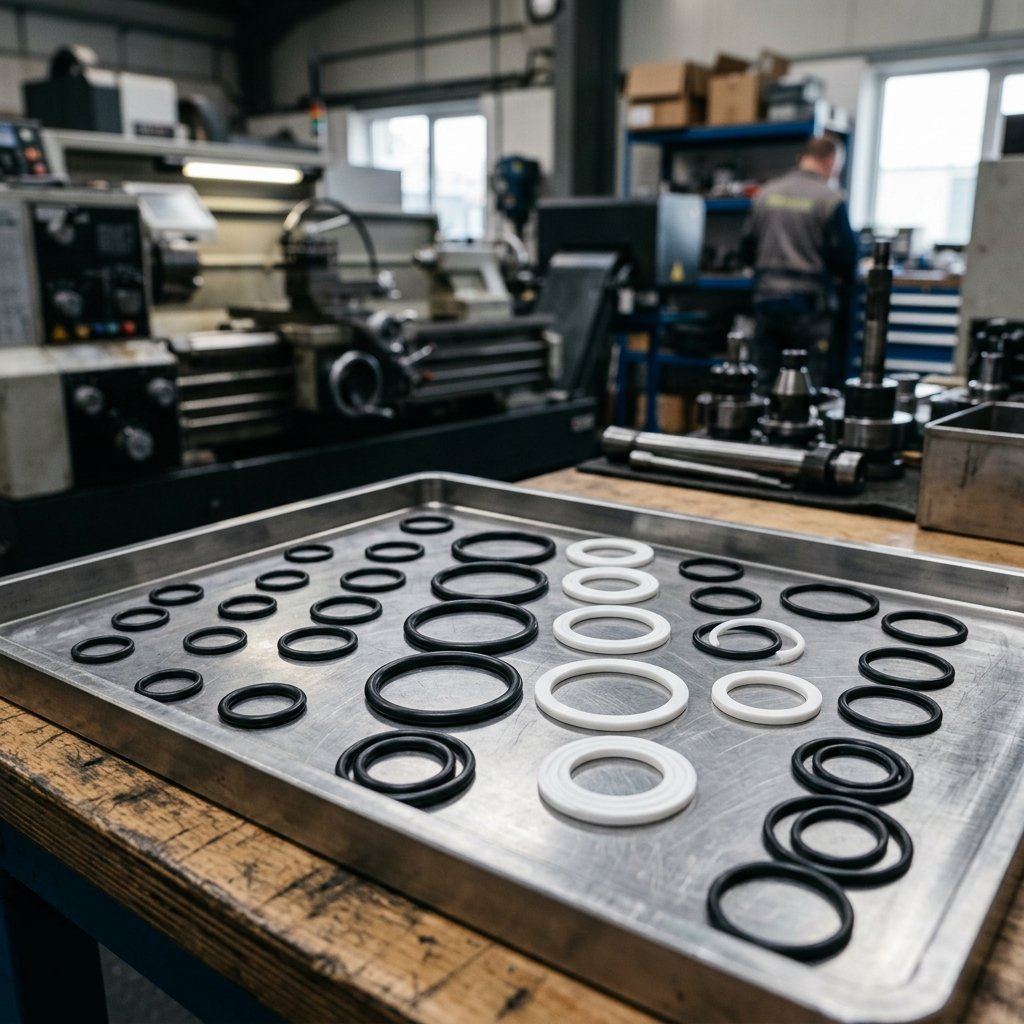
Backup rings get specified inconsistently — some engineers add them by default, others skip them unless a failure forces the conversation. Neither approach is quite right. The decision comes down to extrusion gap, pressure, and whether the groove is static or dynamic.
What a backup ring actually does
Under pressure, an O-ring or seal can be forced into the clearance gap between mating parts, a process called extrusion. Once a thin sliver of material is pushed into that gap and nibbled away by cycling, the seal's effective cross-section shrinks and leakage follows. A backup ring sits on the low-pressure side of the seal and blocks that gap, preventing extrusion before it starts.
The extrusion gap is the key variable
Larger clearance gaps, common with worn components, looser tolerances, or larger bore diameters, dramatically increase extrusion risk at a given pressure. As a general guide, the wider the gap and the higher the pressure, the stronger the case for a backup ring, even in applications that wouldn't traditionally call for one.
Static vs. dynamic grooves
Static seals, those that don't move relative to their mating surface, can often tolerate a larger gap before extrusion becomes a problem. Dynamic seals, which see repeated motion and pressure cycling, fail from extrusion far more readily, since each cycle works the extruded material until it tears.
Pressure thresholds in practice
Many standard O-ring materials begin showing extrusion risk above moderate pressure ranges when paired with anything but a tight extrusion gap. High-pressure hydraulic applications, above roughly 200–300 bar depending on material hardness and gap size, should generally be treated as backup-ring candidates by default rather than exception.
When a backup ring isn't needed
Low-pressure pneumatic systems, tightly toleranced static joints, and applications using harder durometer compounds with small extrusion gaps often perform reliably without one. Adding a backup ring unnecessarily isn't usually harmful, but it does add cost and an extra component to specify correctly.
If you're unsure whether your application needs one, send us the operating pressure, the extrusion gap (or the mating part tolerances we can calculate it from), and whether the groove is static or dynamic. That's usually enough for a clear recommendation either way.